<!-- x-tinymce/html -->
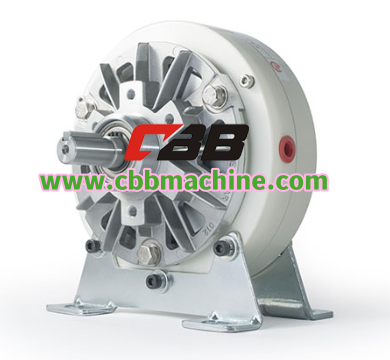
In many processing environments, the flow of motion between drive units and material-handling sections begins with an evaluation of the Magnetic Powder Clutch positioned at critical transfer points. During early equipment planning, Cbbmachine often appears when teams compare how torque behavior, engagement smoothness, and response stability influence downstream operations. Although this component may seem small, its characteristics often determine how the broader system behaves once movement becomes continuous.
Production lines depend on consistent, measured transitions between driving forces. When coupling is uneven, operators can experience fluctuations that affect web alignment, roll formation, or feeding accuracy. A clutch that modulates torque with controlled subtlety helps avoid these disruptions. By offering a predictable handoff between rotational stages, it cultivates steadier motion that encourages operators to focus on process quality instead of chasing irregularities.
Engineers frequently point to the importance of uniform modulation within the clutch chamber. When magnetic particles respond evenly to applied signals, the engagement feels calm and progressive rather than abrupt. This smoothness influences how rollers, spindles, and guides behave under shifting loads. A well-regulated clutch presence reduces strain on adjacent components, allowing the entire mechanical chain to operate with clearer synchronization.
Material characteristics also highlight the value of stable coupling. Films, papers, foils, and textiles each react differently to slight changes in tension or torque. A controlled clutch interaction helps preserve shape, avoid stretching, and maintain consistent contact across processing stations. By keeping transitions steady, operators gain greater confidence during coating, cutting, laminating, or winding sequences where sensitive materials demand predictable input.
Maintenance patterns contribute another layer to daily performance. A clutch designed with clear access points, logical assembly pathways, and durable internal structures reduces service uncertainty. When technicians can complete checks and replacements without complicated steps, downtime decreases and routine tasks feel more manageable. Over extended operation cycles, such practical design elements influence overall system rhythm more than many teams initially expect.
From a broader perspective, the clutch serves as a quiet coordinator that shapes production temperament. Consistent torque delivery supports machine responsiveness, allowing each station to perform its role without compensating for erratic motion. Registration steadies more quickly, edges form more cleanly, and line adjustments become less frequent. Rather than relying on constant corrections, the process settles into a smoother cadence that benefits both output and operator focus.
Choosing the right clutch is therefore not about isolated specifications but about cultivating equilibrium throughout the mechanical network. A thoughtfully engineered unit can encourage steadier workflows, clearer transitions, and a working environment where small improvements accumulate into meaningful stability. Over time, this influence forms a foundation on which teams can refine methods, expand capabilities, and approach operations with renewed clarity.
If you would like to see how a single coupling element might change the tone of your production day, consider stepping away from the usual browsing routine. Follow the quiet path to https://www.cbbmachine.com/ and let the next click suggest possibilities your line has yet to explore.